
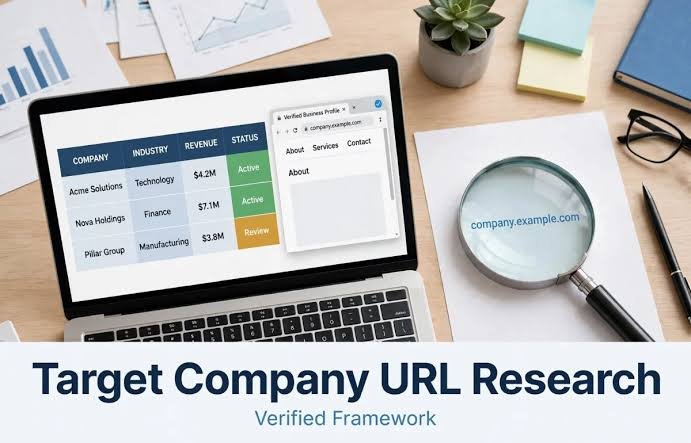
In today’s competitive business environment, understanding a company before working with it, selling to it, or competing with it has become increasingly important. Businesses need reliable information to make better decisions, identify opportunities, and understand their position in the market. This is where Target Company Research becomes valuable.
Target company research is the process of collecting and analyzing publicly available information about a specific business. It can help sales teams, marketers, recruiters, investors, researchers, and entrepreneurs understand a company’s background, products, customers, industry, online presence, and business activities.
What Is Target Company Research?
Target Company Research means studying a particular company to develop a clearer understanding of its business. Instead of looking at an entire industry, the research focuses on one specific organization or a selected group of companies.
The information collected may include the company’s official website, products and services, business locations, leadership information, industry, competitors, customer base, career opportunities, and public announcements.
The exact information needed depends on the purpose of the research. A sales team may focus on potential customers, while a competitor analysis project may focus on products, pricing, positioning, and marketing strategies.
Why Is Target Company Research Important?
Researching a company before making business decisions can reduce uncertainty. Without sufficient information, businesses may make assumptions that do not accurately reflect the company’s current situation.
For example, a sales representative who understands a potential customer’s products and market can create a more relevant approach. Similarly, a job seeker who researches an organization can better understand its business and prepare for an interview.
Target company research can also help businesses identify opportunities that might otherwise be missed.
Key Information to Collect
A good research process begins by deciding what information is actually needed. Common categories include:
- Company name and official website
- Industry and business category
- Products and services
- Main markets and locations
- Company size
- Leadership and management
- Competitors
- Recent company developments
- Careers and hiring activity
- Publicly available financial information
- Online presence and digital marketing activity
Organizing this information in a structured format makes it easier to compare companies and identify useful patterns.
Researching the Company’s Website
The official website is often one of the best starting points for Target Company Research. A company’s website can provide information about its products, services, mission, locations, contact details, and business activities.
Important pages may include the About page, Products or Services section, News or Blog section, Careers page, and Contact page.
However, researchers should remember that company websites are controlled by the organizations themselves. Information may therefore be presented from a marketing perspective. For a balanced research process, it can be useful to compare website information with other reliable public sources.
Understanding Products and Services
Learning what a company actually sells is an important part of company research. Researchers should identify the main products or services and understand who they are designed for.
It can also be helpful to determine whether the business serves individual consumers, other businesses, government organizations, or multiple customer groups.
Understanding these areas can provide context for later research into the company’s market position and competitors.
Identifying Competitors
Competitor research provides another useful layer of information. A target company may operate in a crowded market or serve a specialized niche with only a few direct competitors.
Researchers can compare businesses based on their products, services, target customers, geographic coverage, branding, and online presence.
The goal is not simply to create a list of competitors. The more useful objective is to understand how the target company fits within its overall market.
Target Company Research for Sales
Sales teams frequently use company research when preparing for business-to-business outreach. Knowing something about a potential customer can make communication more relevant.
For example, a salesperson may research the company’s industry, products, recent announcements, and business priorities before contacting it.
This approach can be more effective than sending the same generic message to every company.
Good research can also help sales teams identify which products or services may be most relevant to a particular organization.
Target Company Research for Marketing
Marketing professionals can use target company research to understand audiences and competitors.
Research can reveal how companies position themselves, what topics they discuss, which products they promote, and how they communicate with customers.
This information can contribute to better marketing planning and help teams identify areas where their own messaging could be improved.
Research for Job Seekers
Company research is not limited to businesses. Job seekers can also benefit from learning about an organization before applying or attending an interview.
A candidate can research the company’s products, industry, culture-related information published by the organization, recent developments, and available positions.
Having a basic understanding of the company can help candidates ask more informed questions and demonstrate genuine preparation.
Using Public Sources
Reliable company research often combines several public sources. These may include official company websites, government records, industry publications, reputable news organizations, professional networking platforms, and business directories.
Researchers should compare information when possible, particularly when dealing with important facts such as company ownership, leadership, locations, or recent developments.
Information can change over time, so older sources should be treated carefully.
Organizing Research Data
Collecting information is only part of the process. It is equally important to organize the findings.
A spreadsheet can be useful for maintaining company names, websites, industries, locations, products, competitors, and research notes. Larger research projects may use specialized databases or customer relationship management systems.
Consistent formatting makes it easier to search, filter, compare, and update company records.
Common Mistakes to Avoid
One common mistake is relying on a single source. A company website may provide useful information, but additional sources can offer valuable context.
Another mistake is using outdated information. Companies can change their leadership, products, locations, and strategies over time.
Researchers should also avoid confusing businesses with similar names. Verifying the company’s official website and other identifying information can help prevent incorrect matches.
Finally, researchers should distinguish between verified facts and assumptions. Clear research should explain what is known rather than presenting guesses as facts.
Best Practices for Better Research
A structured approach can make Target Company Research faster and more reliable.
Start by defining the purpose of the research. Then create a list of information requirements before beginning the search.
Use the company’s official website as a starting point, but compare important information with reliable external sources. Record the source and date of important findings where appropriate.
Finally, review the completed research and remove information that is irrelevant, duplicated, or unsupported.
Final Thoughts
Target Company Research is an important process for understanding businesses and making informed decisions. Whether the goal is sales prospecting, marketing, competitor analysis, recruitment, or general business research, accurate information can provide a significant advantage.
The most effective research combines multiple reliable sources, organized data, and careful verification. Rather than collecting as much information as possible, researchers should focus on information that directly supports their objective.
As companies continue to change and compete in increasingly digital markets, the ability to research and understand target organizations will remain a valuable business skill. A well-planned research process can turn scattered public information into useful insights and help individuals and organizations make smarter decisions.
You May Also Read




One Comment