
Long-Tail Keywords: Maspalomas Dunes
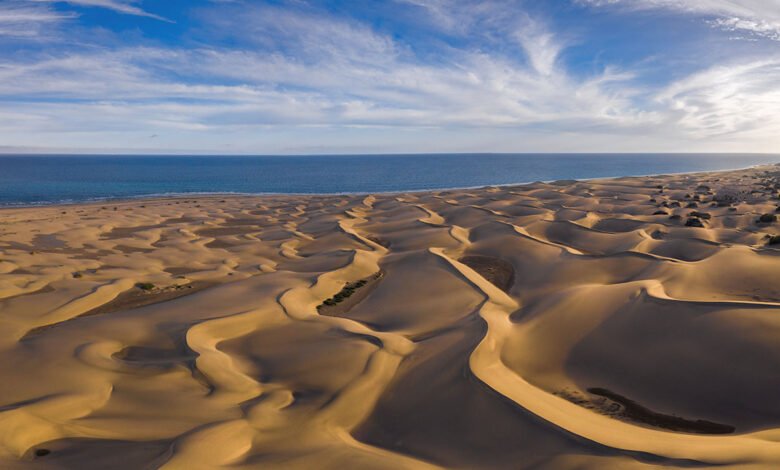
The Maspalomas Dunes are one of the most recognizable natural attractions in Gran Canaria, Spain. Located beside the Atlantic Ocean in the southern part of the island, this remarkable landscape combines rolling sand dunes, coastal scenery, vegetation, and a nearby lagoon. The area attracts visitors who want to experience one of the island’s most distinctive environments while enjoying beautiful views and a relaxing coastal atmosphere.
Unlike an ordinary beach, the Maspalomas landscape offers a unique combination of sand, sea, and natural habitats. The dunes stretch along the coast and create constantly changing patterns as wind moves the sand. Their unusual appearance has made them an important destination for travelers interested in nature, photography, walking, and sightseeing.
Where Are the Maspalomas Dunes?
The Maspalomas Dunes are located near Maspalomas, a popular resort area on the southern coast of Gran Canaria in the Canary Islands. The dunes form part of a larger protected natural environment that includes beaches, vegetation, and the Maspalomas Lagoon.
Their location makes them relatively easy to include in a wider Gran Canaria itinerary. Visitors staying in Maspalomas or nearby resort areas can reach the dunes and explore different sections of the landscape.
The contrast between the golden sand and the blue Atlantic Ocean creates some of the most memorable scenery in southern Gran Canaria.
A Unique Coastal Landscape
One of the most interesting features of the dunes is their constantly changing appearance. Wind transports sand across the landscape, gradually creating new shapes and ridges.
As a result, the dunes do not look exactly the same every day. Some areas appear smooth, while others develop dramatic curves and slopes. Walking across the landscape can therefore feel like exploring a miniature desert beside the ocean.
The dunes are also connected to other natural environments, making the area more than simply a collection of sand hills. Different types of vegetation and wildlife can be found throughout the wider protected area.
Maspalomas Beach
Maspalomas Beach lies next to the dunes and provides visitors with an opportunity to combine a beach day with nature exploration. The long coastline offers impressive views of the Atlantic and the surrounding sand landscape.
Many visitors enjoy walking along the beach because it provides a different perspective of the dunes. From the shoreline, the golden sand rises behind the coast, creating a striking contrast with the ocean.
The beach is also a popular place to relax, enjoy the coastal atmosphere, and watch the changing colors of the landscape throughout the day.
The Maspalomas Lighthouse
The Maspalomas Lighthouse is another important landmark near the dunes. Known as the Faro de Maspalomas, it stands close to the southern coastline and has become strongly associated with the area.
The lighthouse provides an easily recognizable reference point when exploring the southern part of Gran Canaria. Its presence adds another interesting feature to the landscape and makes the surrounding area particularly attractive for photography.
Visitors can combine a visit to the dunes with a walk toward the lighthouse and the nearby coastal areas.
Maspalomas Lagoon
The Maspalomas Lagoon is another significant natural feature in the area. Located near the dunes and coastline, the lagoon provides a habitat for various forms of wildlife.
The combination of lagoon, vegetation, dunes, and ocean creates a diverse environment within a relatively small coastal region. Nature enthusiasts may find the lagoon particularly interesting because it adds an ecological dimension to the experience.
The lagoon also demonstrates that the Maspalomas area is not simply a tourist beach destination. It contains natural habitats that contribute to the environmental importance of the region.
Best Time to Visit
The Canary Islands generally have a mild climate, making Gran Canaria a popular destination throughout much of the year. However, conditions can still vary depending on the season and time of day.
Early morning and late afternoon are often appealing times for exploring the dunes. Temperatures may be more comfortable for walking, while the changing sunlight can create beautiful shadows across the sand.
Sunset can be especially impressive. As the sun moves lower over the horizon, the dunes can take on warmer shades, producing attractive scenery for photography.
Visitors should check local conditions before heading out and prepare appropriately for sun, wind, and warm weather.
Exploring the Dunes
Walking is one of the simplest ways to experience the landscape. Visitors can explore different areas and observe how the shapes of the dunes change from one location to another.
Because the area is environmentally sensitive, visitors should follow local rules and use designated paths or access areas where required. Respecting the natural environment helps protect the dunes for future generations.
Comfortable footwear, sun protection, water, and appropriate clothing can make a walk more enjoyable, especially during warmer periods.
Photography at Maspalomas Dunes
The dunes are a favorite location for photography because of their dramatic textures and natural colors. The landscape offers opportunities for wide scenic photographs as well as detailed images of individual sand patterns.
Morning and evening light can create stronger shadows and emphasize the curves of the dunes. Photographers can also use the ocean, vegetation, lighthouse, or distant skyline as contrasting elements.
Even visitors using a smartphone can capture impressive images because the landscape naturally provides strong compositions.
Wildlife and Natural Environment
Although the dunes may initially appear to be a simple sandy environment, the broader Maspalomas area supports a variety of plants and animals.
The lagoon and surrounding vegetation provide habitats that are different from the dry dune landscape. This combination of ecosystems is one reason the area has environmental significance.
Visitors should avoid disturbing wildlife and should not remove plants, sand, or other natural materials. Responsible tourism helps maintain the area’s ecological character.
Why Maspalomas Dunes Are Popular
The popularity of the Maspalomas Dunes comes from their unusual combination of natural beauty and accessibility. Visitors do not have to travel deep into a remote desert to experience dramatic sand landscapes. Instead, the dunes are located beside a major coastal destination.
The area also offers variety. A single visit can include a walk through the dunes, time at the beach, views of the ocean, a visit near the lighthouse, and exploration around the lagoon.
This makes the destination suitable for different types of travelers.
Tips for Visitors
Anyone planning to explore the dunes can make the experience more comfortable by preparing in advance. Carrying drinking water is important, particularly during warm weather. Sun protection such as a hat and sunscreen can also be useful.
It is worth allowing enough time rather than rushing through the area. The landscape is best appreciated by walking slowly and taking time to observe the scenery.
Visitors should also respect environmental regulations and avoid entering restricted areas. Keeping the surroundings clean is another simple way to support responsible tourism.
Nearby Attractions
The dunes are located in an area with many other attractions. Visitors can explore the Maspalomas coastline, enjoy local restaurants and shops, or visit other parts of southern Gran Canaria.
The nearby resort areas provide accommodation and services for travelers, making the dunes easy to include in a longer holiday itinerary.
Those interested in nature can combine their visit with other outdoor experiences around the island, while travelers seeking relaxation can spend time along the nearby beaches.
Final Thoughts
The Maspalomas Dunes offer a memorable combination of sand, ocean, wildlife, and coastal scenery. Their unusual location beside the Atlantic makes them one of Gran Canaria’s most distinctive natural attractions.
Whether someone visits for photography, sightseeing, walking, nature exploration, or simply to enjoy the scenery, the dunes provide an experience that feels different from a typical beach destination.
With their changing sand formations, nearby lagoon, famous lighthouse, and beautiful coastline, Maspalomas demonstrates the natural diversity of Gran Canaria. A visit to this remarkable landscape can be one of the highlights of exploring the Canary Islands.
Maspalomas Dunes: A Natural Wonder of Gran Canaria
Long-Tail Keywords: Maspalomas Dunes
The Maspalomas Dunes are one of the most recognizable natural attractions in Gran Canaria, Spain. Located beside the Atlantic Ocean in the southern part of the island, this remarkable landscape combines rolling sand dunes, coastal scenery, vegetation, and a nearby lagoon. The area attracts visitors who want to experience one of the island’s most distinctive environments while enjoying beautiful views and a relaxing coastal atmosphere.
Unlike an ordinary beach, the Maspalomas landscape offers a unique combination of sand, sea, and natural habitats. The dunes stretch along the coast and create constantly changing patterns as wind moves the sand. Their unusual appearance has made them an important destination for travelers interested in nature, photography, walking, and sightseeing.
Where Are the Maspalomas Dunes?
The Maspalomas Dunes are located near Maspalomas, a popular resort area on the southern coast of Gran Canaria in the Canary Islands. The dunes form part of a larger protected natural environment that includes beaches, vegetation, and the Maspalomas Lagoon.
Their location makes them relatively easy to include in a wider Gran Canaria itinerary. Visitors staying in Maspalomas or nearby resort areas can reach the dunes and explore different sections of the landscape.
The contrast between the golden sand and the blue Atlantic Ocean creates some of the most memorable scenery in southern Gran Canaria.
A Unique Coastal Landscape
One of the most interesting features of the dunes is their constantly changing appearance. Wind transports sand across the landscape, gradually creating new shapes and ridges.
As a result, the dunes do not look exactly the same every day. Some areas appear smooth, while others develop dramatic curves and slopes. Walking across the landscape can therefore feel like exploring a miniature desert beside the ocean.
The dunes are also connected to other natural environments, making the area more than simply a collection of sand hills. Different types of vegetation and wildlife can be found throughout the wider protected area.
Maspalomas Beach
Maspalomas Beach lies next to the dunes and provides visitors with an opportunity to combine a beach day with nature exploration. The long coastline offers impressive views of the Atlantic and the surrounding sand landscape.
Many visitors enjoy walking along the beach because it provides a different perspective of the dunes. From the shoreline, the golden sand rises behind the coast, creating a striking contrast with the ocean.
The beach is also a popular place to relax, enjoy the coastal atmosphere, and watch the changing colors of the landscape throughout the day.
The Maspalomas Lighthouse
The Maspalomas Lighthouse is another important landmark near the dunes. Known as the Faro de Maspalomas, it stands close to the southern coastline and has become strongly associated with the area.
The lighthouse provides an easily recognizable reference point when exploring the southern part of Gran Canaria. Its presence adds another interesting feature to the landscape and makes the surrounding area particularly attractive for photography.
Visitors can combine a visit to the dunes with a walk toward the lighthouse and the nearby coastal areas.
Maspalomas Lagoon
The Maspalomas Lagoon is another significant natural feature in the area. Located near the dunes and coastline, the lagoon provides a habitat for various forms of wildlife.
The combination of lagoon, vegetation, dunes, and ocean creates a diverse environment within a relatively small coastal region. Nature enthusiasts may find the lagoon particularly interesting because it adds an ecological dimension to the experience.
The lagoon also demonstrates that the Maspalomas area is not simply a tourist beach destination. It contains natural habitats that contribute to the environmental importance of the region.
Best Time to Visit
The Canary Islands generally have a mild climate, making Gran Canaria a popular destination throughout much of the year. However, conditions can still vary depending on the season and time of day.
Early morning and late afternoon are often appealing times for exploring the dunes. Temperatures may be more comfortable for walking, while the changing sunlight can create beautiful shadows across the sand.
Sunset can be especially impressive. As the sun moves lower over the horizon, the dunes can take on warmer shades, producing attractive scenery for photography.
Visitors should check local conditions before heading out and prepare appropriately for sun, wind, and warm weather.
Exploring the Dunes
Walking is one of the simplest ways to experience the landscape. Visitors can explore different areas and observe how the shapes of the dunes change from one location to another.
Because the area is environmentally sensitive, visitors should follow local rules and use designated paths or access areas where required. Respecting the natural environment helps protect the dunes for future generations.
Comfortable footwear, sun protection, water, and appropriate clothing can make a walk more enjoyable, especially during warmer periods.
Photography at Maspalomas Dunes
The dunes are a favorite location for photography because of their dramatic textures and natural colors. The landscape offers opportunities for wide scenic photographs as well as detailed images of individual sand patterns.
Morning and evening light can create stronger shadows and emphasize the curves of the dunes. Photographers can also use the ocean, vegetation, lighthouse, or distant skyline as contrasting elements.
Even visitors using a smartphone can capture impressive images because the landscape naturally provides strong compositions.
Wildlife and Natural Environment
Although the dunes may initially appear to be a simple sandy environment, the broader Maspalomas area supports a variety of plants and animals.
The lagoon and surrounding vegetation provide habitats that are different from the dry dune landscape. This combination of ecosystems is one reason the area has environmental significance.
Visitors should avoid disturbing wildlife and should not remove plants, sand, or other natural materials. Responsible tourism helps maintain the area’s ecological character.
Why Maspalomas Dunes Are Popular
The popularity of the Maspalomas Dunes comes from their unusual combination of natural beauty and accessibility. Visitors do not have to travel deep into a remote desert to experience dramatic sand landscapes. Instead, the dunes are located beside a major coastal destination.
The area also offers variety. A single visit can include a walk through the dunes, time at the beach, views of the ocean, a visit near the lighthouse, and exploration around the lagoon.
This makes the destination suitable for different types of travelers.
Tips for Visitors
Anyone planning to explore the dunes can make the experience more comfortable by preparing in advance. Carrying drinking water is important, particularly during warm weather. Sun protection such as a hat and sunscreen can also be useful.
It is worth allowing enough time rather than rushing through the area. The landscape is best appreciated by walking slowly and taking time to observe the scenery.
Visitors should also respect environmental regulations and avoid entering restricted areas. Keeping the surroundings clean is another simple way to support responsible tourism.
Nearby Attractions
The dunes are located in an area with many other attractions. Visitors can explore the Maspalomas coastline, enjoy local restaurants and shops, or visit other parts of southern Gran Canaria.
The nearby resort areas provide accommodation and services for travelers, making the dunes easy to include in a longer holiday itinerary.
Those interested in nature can combine their visit with other outdoor experiences around the island, while travelers seeking relaxation can spend time along the nearby beaches.
Final Thoughts
The Maspalomas Dunes offer a memorable combination of sand, ocean, wildlife, and coastal scenery. Their unusual location beside the Atlantic makes them one of Gran Canaria’s most distinctive natural attractions.
Whether someone visits for photography, sightseeing, walking, nature exploration, or simply to enjoy the scenery, the dunes provide an experience that feels different from a typical beach destination.
With their changing sand formations, nearby lagoon, famous lighthouse, and beautiful coastline, Maspalomas demonstrates the natural diversity of Gran Canaria. A visit to this remarkable landscape can be one of the highlights of exploring the Canary Islands.
You May Also Read

One Comment