
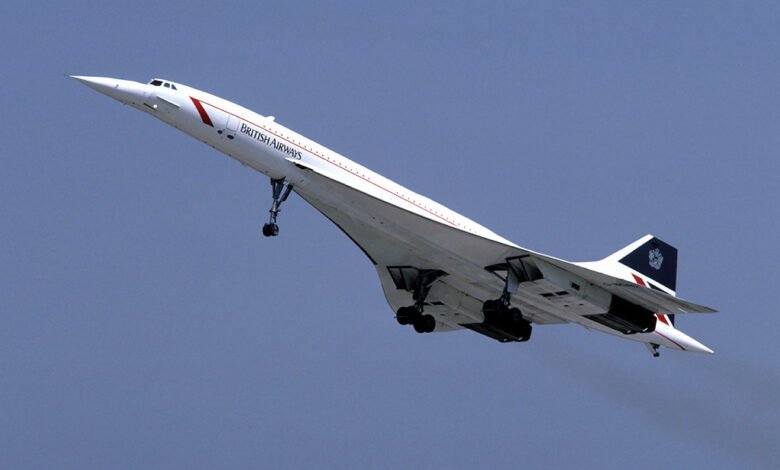
The the concorde plane is one of the most recognizable aircraft in aviation history. Known for its distinctive shape, extraordinary speed, and transatlantic service, Concorde represented an ambitious attempt to make commercial supersonic travel a practical reality. Although passenger flights ended years ago, the aircraft continues to attract interest from aviation enthusiasts, historians, and travelers.
What Was the Concorde Plane?
Concorde was a supersonic passenger aircraft developed through a collaboration between British and French aviation industries. It was designed to travel significantly faster than conventional commercial aircraft, allowing passengers to cross the Atlantic in a much shorter period.
The aircraft entered commercial service in the 1970s and became particularly associated with airlines such as British Airways and Air France. Its operation represented a major technological achievement during an important period in the development of aviation.
The Speed of Concorde
One of Concorde’s most famous characteristics was its speed. It could cruise at approximately Mach 2, meaning it traveled at around twice the speed of sound.
This capability dramatically reduced travel times on routes between Europe and North America. A journey that could take many hours on a conventional aircraft could be completed in considerably less time aboard Concorde.
The aircraft’s speed was possible because of its aerodynamic design, powerful engines, and ability to operate at very high altitudes.
Distinctive Aircraft Design
Concorde had an unmistakable appearance. Its long, slender fuselage and sharply pointed nose were designed with supersonic flight in mind.
The aircraft also featured a delta-shaped wing. This design provided the aerodynamic characteristics required for high-speed flight.
Another unusual feature was the movable nose. The nose could be lowered during takeoff and landing to improve visibility for the pilots, then raised during faster portions of the flight.
These design elements made Concorde visually different from most commercial aircraft.
Concorde’s Engines
Concorde was powered by four Rolls-Royce/Snecma Olympus 593 turbojet engines. These engines were specially adapted for supersonic passenger travel.
Engine performance was particularly important because Concorde needed substantial power during takeoff and acceleration. Once the aircraft reached cruising altitude and speed, its aerodynamic design allowed it to maintain supersonic flight efficiently for its intended routes.
The engineering behind the engines remains an important part of Concorde’s technological legacy.
Commercial Passenger Service
Concorde began commercial passenger operations in 1976. British Airways and Air France became the primary operators.
The aircraft was primarily used on high-profile international routes, especially between Europe and North America. Because of its high operating costs and limited passenger capacity, Concorde was positioned as a premium travel experience rather than ordinary mass-market transportation.
Passengers paid a premium for the opportunity to experience supersonic commercial flight.
Why Concorde Was Special
Concorde was unusual because it combined commercial passenger transportation with supersonic performance. Before its introduction, supersonic flight had largely been associated with military aircraft and experimental aviation.
Concorde demonstrated that supersonic passenger travel could operate as a commercial service under carefully controlled conditions.
Its legacy therefore extends beyond its passenger routes. It became a symbol of technological ambition and advanced aerospace engineering.
Challenges of Supersonic Travel
Despite its impressive capabilities, Concorde faced several challenges.
Operating a supersonic passenger aircraft required significant fuel consumption and specialized maintenance. The aircraft also generated a sonic boom when traveling faster than sound, which limited where supersonic flight could take place over land.
Noise concerns, operating costs, limited routes, and environmental considerations all affected the practicality of commercial supersonic transportation.
These challenges contributed to the difficulty of making supersonic passenger travel widely available.
The End of Concorde Flights
Concorde’s commercial service ended in 2003. Several factors contributed to the decision to retire the aircraft, including economic pressures, maintenance considerations, and changing conditions in the aviation industry.
Although Concorde had developed a strong reputation, the overall market for supersonic passenger transportation remained limited.
The retirement marked the end of an unusual chapter in commercial aviation.
Concorde’s Lasting Legacy
Even after its retirement, Concorde remains an important aircraft in aviation history. Several surviving aircraft have been preserved in museums and aviation collections around the world.
These preserved aircraft allow visitors to see the distinctive design and learn about the engineering involved in supersonic passenger transportation.
Concorde has also influenced discussions about the future of high-speed commercial aviation. Modern aerospace companies continue to investigate technologies that could make faster-than-sound passenger travel more practical.
The Future of Supersonic Passenger Travel
Interest in supersonic aviation has not disappeared. New aerospace projects are exploring quieter supersonic flight, improved engine technology, and more efficient aircraft designs.
One of the major goals for modern supersonic aircraft is addressing the limitations that affected earlier designs. Reducing noise, improving efficiency, and meeting modern environmental requirements are important considerations.
Whether future aircraft can successfully overcome these challenges remains a subject of ongoing aerospace development.
Final Thoughts
The Concorde plane remains one of the most remarkable examples of commercial aviation engineering. Its ability to carry passengers at approximately twice the speed of sound made it fundamentally different from conventional airliners.
Although Concorde has not carried passengers for many years, its influence continues through museums, aviation research, historical collections, and renewed interest in supersonic transportation. For aviation enthusiasts, Concorde represents an era when engineers and airlines pushed the boundaries of what commercial passenger aircraft could accomplish.
You May Also Read

One Comment