Advice Tips TheWeeklyHealthiness: Simple Ways to Build a Healthier Lifestyle
Advice Tips TheWeeklyHealthiness

Introduction
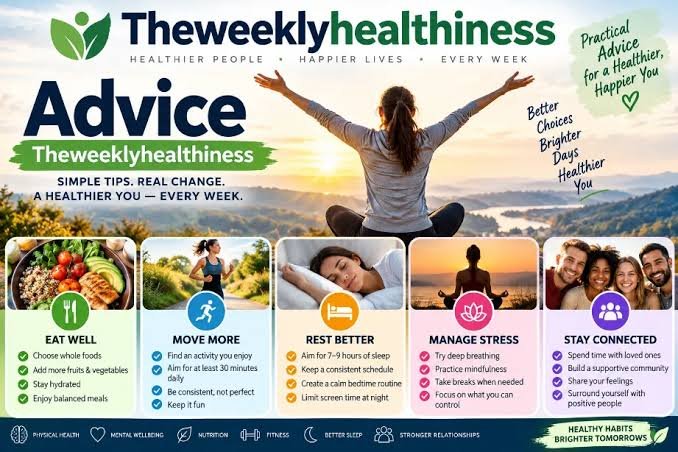
Advice Tips TheWeeklyHealthiness is a useful topic for readers who want to improve their daily routines, develop healthier habits, and make better lifestyle choices. Maintaining good health does not always require major changes. Small steps, such as eating balanced meals, staying physically active, drinking enough water, and getting sufficient sleep, can make everyday life more comfortable and productive.
In a busy world, people often overlook their physical and mental well-being because of work, education, family responsibilities, and digital distractions. A practical health routine can help people manage these responsibilities while making time for themselves. TheWeeklyHealthiness focuses on accessible wellness advice that readers can gradually incorporate into their everyday lives.
1. Start Your Day With Healthy Habits
The way you begin your morning can influence how you approach the rest of the day. A simple morning routine can help you feel organized and prepared for daily responsibilities.
Try waking up at a consistent time, drinking water when you feel thirsty, and allowing yourself a few minutes to prepare for the day. A balanced breakfast containing foods such as eggs, oats, fruit, yogurt, or whole-grain bread can provide important nutrients and energy.
You do not need an elaborate morning routine to support your well-being. Choose habits that fit your schedule and repeat them consistently. Even a short period of quiet time, stretching, or planning your daily tasks can help create a more organized start.
2. Choose Balanced and Nutritious Meals
Nutrition is an important part of maintaining overall health. A balanced eating pattern includes a variety of vegetables, fruits, whole grains, protein sources, and healthy fats.
Instead of focusing on restrictive diets, aim to include different food groups in your regular meals. Beans, lentils, fish, eggs, nuts, vegetables, and seasonal fruits are examples of foods that can contribute valuable nutrients.
Planning meals in advance can also make healthy eating easier. Preparing ingredients before a busy day may reduce the temptation to rely entirely on convenient, highly processed foods.
Remember that healthy eating should be flexible and enjoyable. Cultural food preferences, personal circumstances, and food availability all influence meal choices. The goal is to develop a sustainable approach rather than follow unrealistic dietary rules.
3. Stay Physically Active
Regular physical activity supports heart health, muscle strength, mobility, and emotional well-being. It can also help people maintain energy and improve their ability to complete everyday activities.
Walking, cycling, dancing, swimming, gardening, and playing recreational sports are all possible ways to move more throughout the day. Choose activities that suit your interests and abilities.
If you spend many hours sitting, take occasional movement breaks. Walking around your home, stretching gently, or standing between tasks can help interrupt long periods of inactivity.
Consistency matters more than choosing a complicated exercise routine. Start with manageable activities and increase your movement gradually. Anyone with specific health concerns should seek appropriate professional guidance before beginning a demanding exercise program.
4. Make Quality Sleep a Priority
Sleep is essential for physical recovery, concentration, memory, and emotional balance. Poor sleep can make ordinary tasks feel more difficult and affect how people manage daily stress.
Establishing a regular bedtime and wake-up time can support a consistent sleep schedule. Keep your sleeping environment comfortable, reduce unnecessary noise, and create a relaxing routine before bed.
Limiting stimulating activities close to bedtime may also help. Some people find reading, listening to calm music, or taking a warm shower useful for winding down.
Avoid treating sleep as wasted time. Sufficient rest is an important part of a balanced lifestyle, not a reward that should only come after completing every task.
5. Support Your Mental Well-Being
Mental wellness deserves the same thoughtful attention as physical health. Everyday responsibilities, uncertainty, and social pressures can contribute to stress, making it important to develop healthy coping strategies.
Try setting realistic goals, taking short breaks, spending time outdoors, or speaking with someone you trust when you feel overwhelmed. Writing down your thoughts or organizing your responsibilities into smaller tasks may also help you approach challenges more calmly.
It is equally important to recognize your limits. You do not have to be productive every minute of the day. Rest, recreation, and supportive relationships are valuable parts of a healthy routine.
If emotional difficulties persist or interfere with everyday life, consider speaking with a qualified mental health professional.
6. Stay Hydrated Throughout the Day
Water supports several essential bodily functions, including temperature regulation and normal digestion. Individual fluid needs vary depending on activity levels, weather, age, and other personal factors.
Keep water available during your daily activities and drink regularly, particularly when the weather is hot or you are physically active. Water-rich foods, including cucumbers, oranges, and melons, can also contribute to fluid intake.
There is no single amount that suits everyone in every situation. Pay attention to thirst and your circumstances, and follow medical advice if you have been given specific fluid restrictions.
7. Create a Healthy Work-Life Balance
A healthy lifestyle includes making time for responsibilities as well as relaxation. When work, school, or household tasks occupy the entire day, personal well-being can become difficult to maintain.
Organize your schedule around realistic priorities. Divide larger tasks into smaller steps and allow time for meals, movement, rest, and social connections.
Setting boundaries around work can also help. For example, you might establish a regular time to stop checking work messages or take a break from screens during meals.
Balance does not mean every day must be perfectly organized. It means making reasonable adjustments when life becomes demanding and returning to helpful routines when possible.
8. Build Healthy Habits Gradually
One common mistake people make is trying to change everything at once. Starting several demanding routines simultaneously can become overwhelming and difficult to sustain.
Instead, choose one or two realistic habits. You might begin by adding fruit to breakfast, taking a short daily walk, or creating a more consistent bedtime.
Track your progress in a simple notebook or calendar if that helps you stay motivated. If you miss a day, treat it as an ordinary setback rather than a reason to abandon your plans.
Small, repeated actions can become part of your normal routine over time. The most useful habits are those that fit your real life and remain manageable in the long term.
9. Reduce Unnecessary Digital Distractions
Digital devices help people communicate, study, work, and access useful information. However, excessive screen use can sometimes interfere with sleep, concentration, physical movement, and personal relationships.
Consider taking short breaks from your devices throughout the day. Turn off nonessential notifications, avoid using screens when they prevent you from resting, and make room for offline activities.
Spending time with family, enjoying a hobby, reading a physical book, or going for a walk can provide a welcome change from digital routines.
The goal is not to avoid technology completely. It is to use it intentionally while protecting time for other important activities.
10. Focus on Long-Term Wellness
Good health is influenced by many factors, including daily habits, access to healthcare, living conditions, and individual circumstances. No single tip can guarantee perfect health, but informed choices can support general well-being.
Schedule appropriate health checkups, follow reliable medical advice, and consult qualified professionals when you have persistent symptoms or concerns. Be cautious about online claims that promise immediate results or recommend unproven treatments.
Remember that progress looks different for different people. A practical routine should support your needs rather than create unnecessary pressure.
Conclusion
Advice Tips TheWeeklyHealthiness highlights simple ways to support a healthier and more balanced lifestyle. Nutritious meals, regular movement, sufficient sleep, hydration, stress management, and realistic daily routines can all contribute to overall well-being.
The most important step is to begin with changes that feel achievable. Build habits gradually, remain flexible when circumstances change, and seek reliable professional guidance when necessary. By making thoughtful choices consistently, readers can create a more sustainable approach to everyday wellness.
Long-Tail Keywords
- advice tips theweeklyhealthiness
- TheWeeklyHealthiness health advice
- daily wellness tips for a healthier lifestyle
- simple healthy habits for everyday life
- practical nutrition and fitness advice
- mental wellness and stress management tips
- healthy daily routine ideas
- tips for improving overall well-being
You May Also Read


One Comment